
In the AI age,
you need tools to
innovate faster.
The new tools — AI, low-code, real-time apps — let teams build and adapt faster than ever. But each one is only as good as the floor data underneath it, and most of that data rides on connectivity you don't control. ECHO is the foundation that makes it trustworthy: one solution unifying the network, the devices, and the use cases — turning your facility into a live digital twin and your people into connected digital workers, so the tools you build on top actually work on the floor.
One solution
Network, devices, use cases — unified.
Why most warehouse digital transformation stalls.
It's not the apps or the dashboards. It's the foundation underneath them — connectivity you don't control, systems that can't talk to each other, and safety that's still reactive. Layer software on top of that and the transformation never reaches the floor.
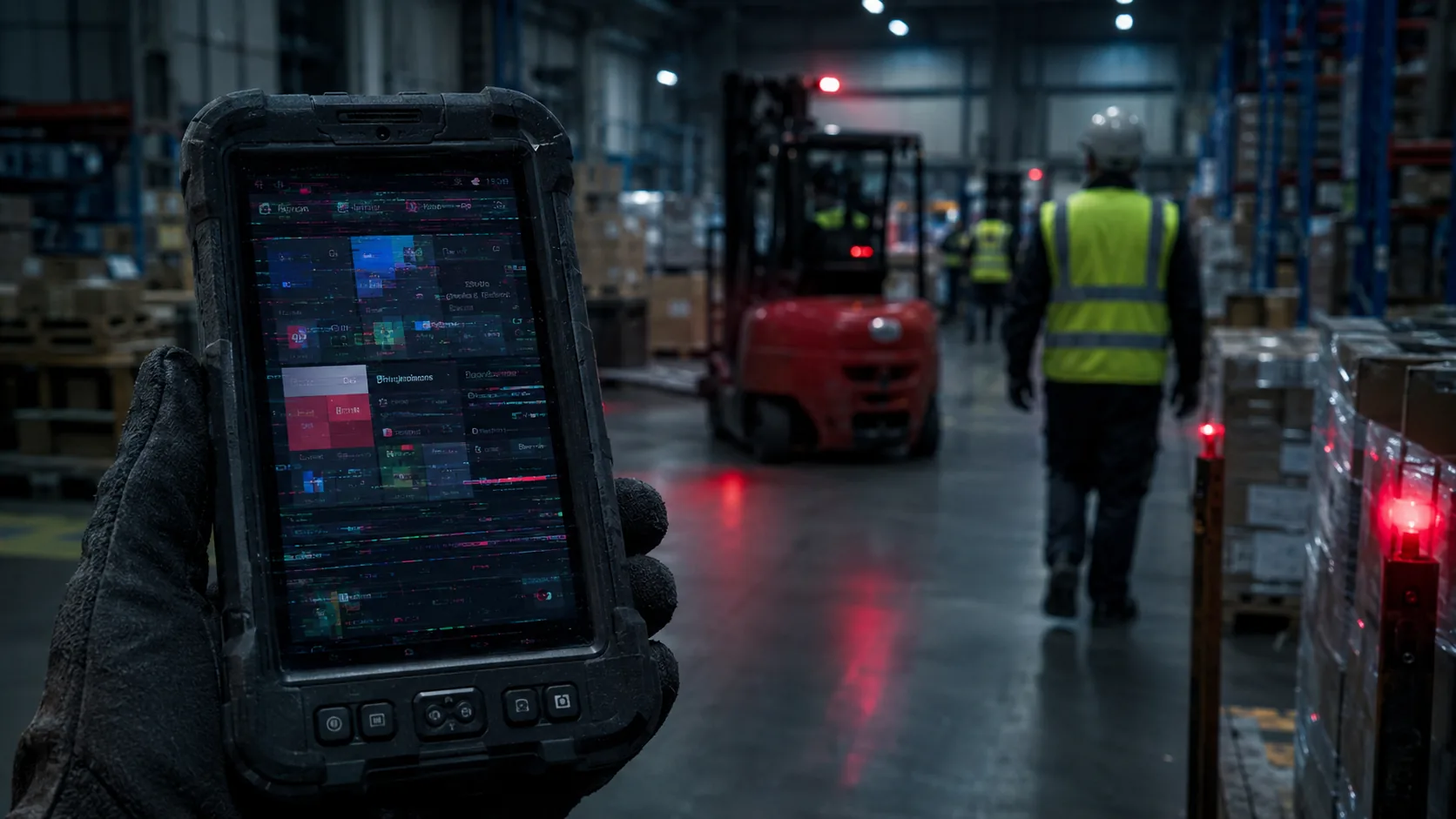
Reactive safety
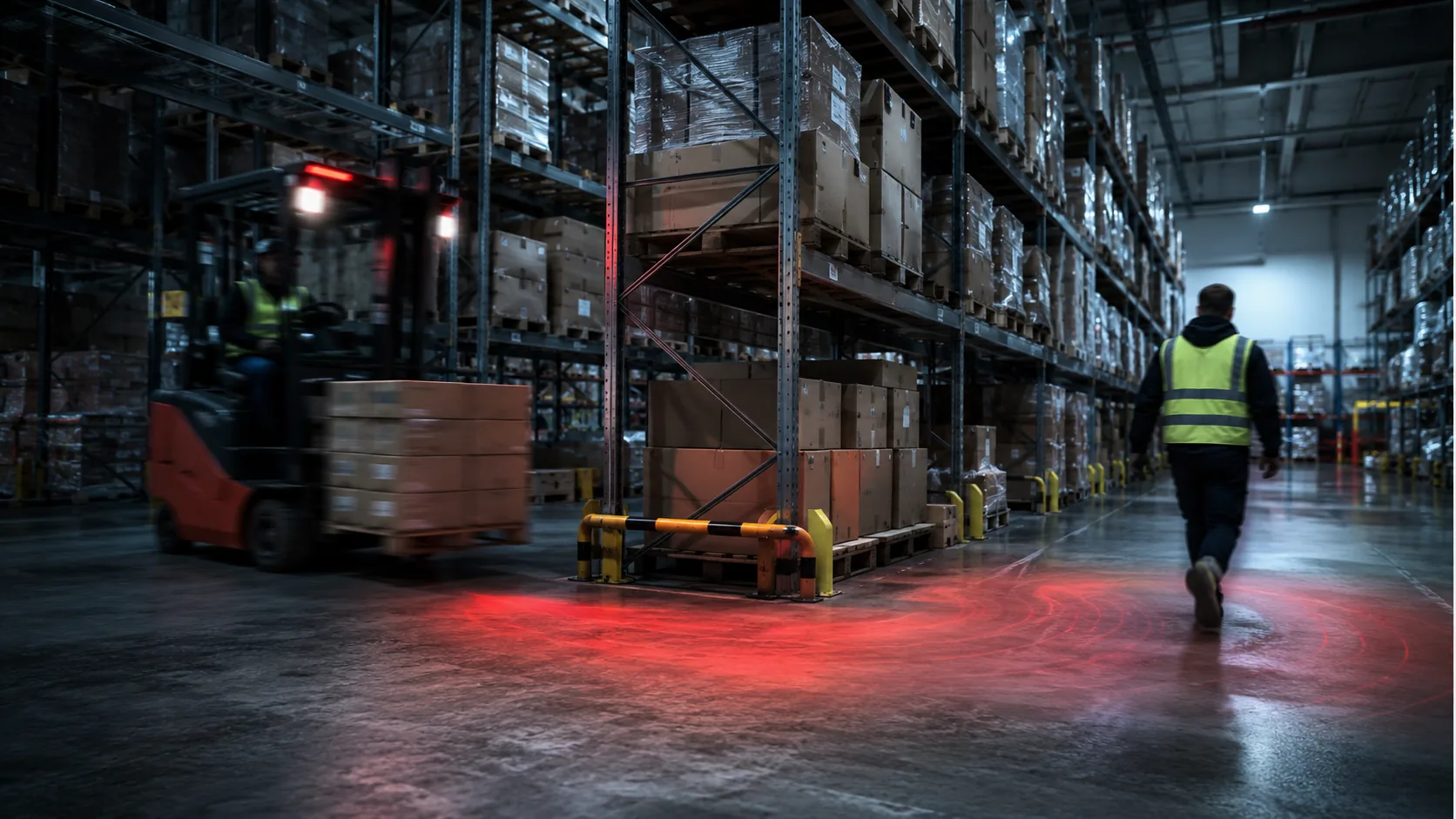
Powered industrial trucks are among the leading causes of serious warehouse injuries. Blind corners, busy docks, and reverse travel produce incidents that line-painting, signage, and after-the-fact reports can't prevent.
A shaky foundation
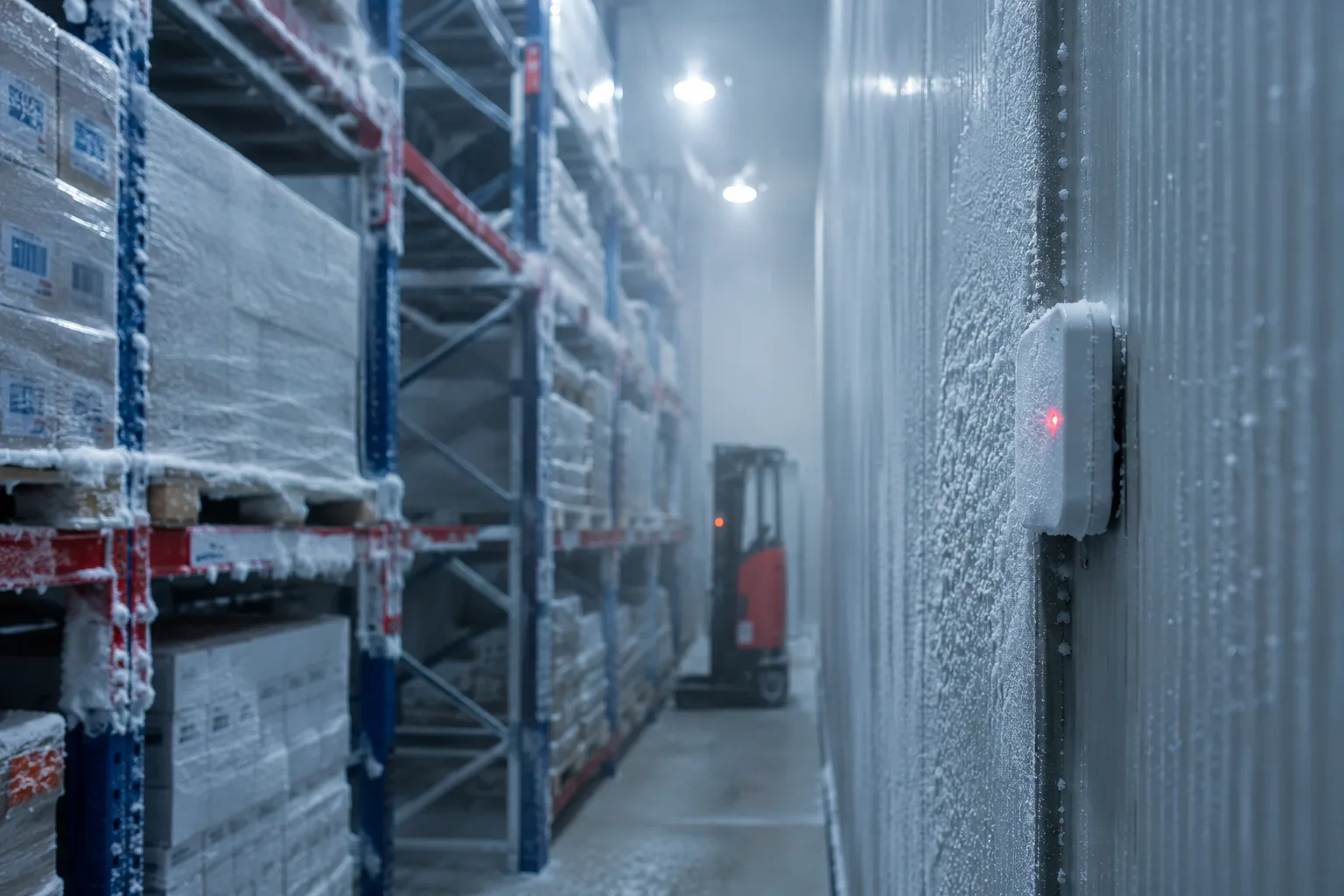
Tall racking, steel, and cold rooms swallow Wi-Fi. Dropped scans, frozen tablets, and orphaned IoT sensors break the very workflows your "digital" tools depend on — exactly where margins are thinnest.
No single truth
Safety, comms, tracking, and sensing each arrive as a separate box with its own network and dashboard. The gaps fill with spreadsheets, exports, and manual workarounds — a tech dump that's expensive to run and impossible to correlate when something goes wrong.
Traceability pressure
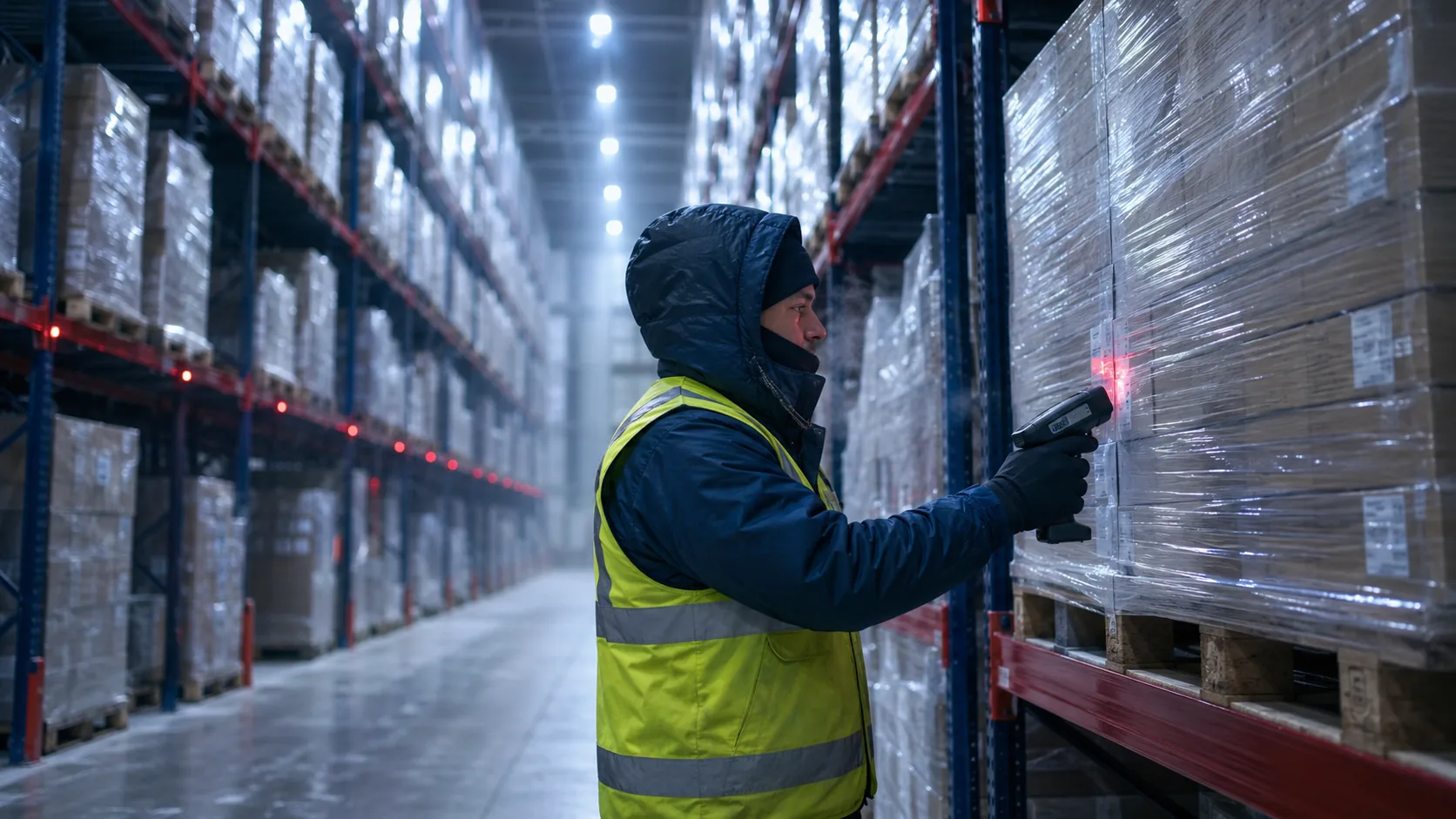
Life-sciences and food freight demand continuous condition logging and clean separation from corporate IT to satisfy GDP, GMP, and 21 CFR Part 11 — hard to prove with consumer-grade gear.
Lost hours
Misplaced pallets, idle equipment, and manual cycle counts cost hours every shift. Without real-time location, "find it" is still a person walking the floor.
No control
Leaning on public carriers or shared Wi-Fi means no control over coverage, priority, or cost — and no path to a network engineered for your building and your devices.
What "real" looks like.
Real transformation isn't another app. It's replacing the shaky foundation with one you own — so the whole building shifts from reactive and fragmented to connected and accountable.
- Software on a foundation you rent
- Commodity Wi-Fi with dead zones in racking & cold rooms
- Six vendors, six dashboards, nothing correlated
- Safety that reacts after the incident report
- Compliance you scramble to prove at audit time
- Pilots that look good in a deck and stall on the floor
- One foundation you own
- Private LTE/5G that holds through racking & cold storage
- One source of truth — a live, single-pane digital twin
- Safety that fires before a collision, and logs every event
- Continuous, audit-ready condition records by default
- A managed deployment that ships — and keeps running
And we don't just install it — we build it. We create the use cases, systems, and products that make the twin work for your operation, then design, deploy, and manage the whole stack hands-on in your building, so it actually ships and keeps running instead of stalling in a pilot.
A solution, not a stack of products.
Real transformation isn't a network, a device, or an app on its own — it's one solution that brings all three together: the network you own, the devices and sensors on it (fully managed), and the use cases built for your operation. The network is the foundation, but the solution is what makes it add up. These are the capabilities it puts on your floor.
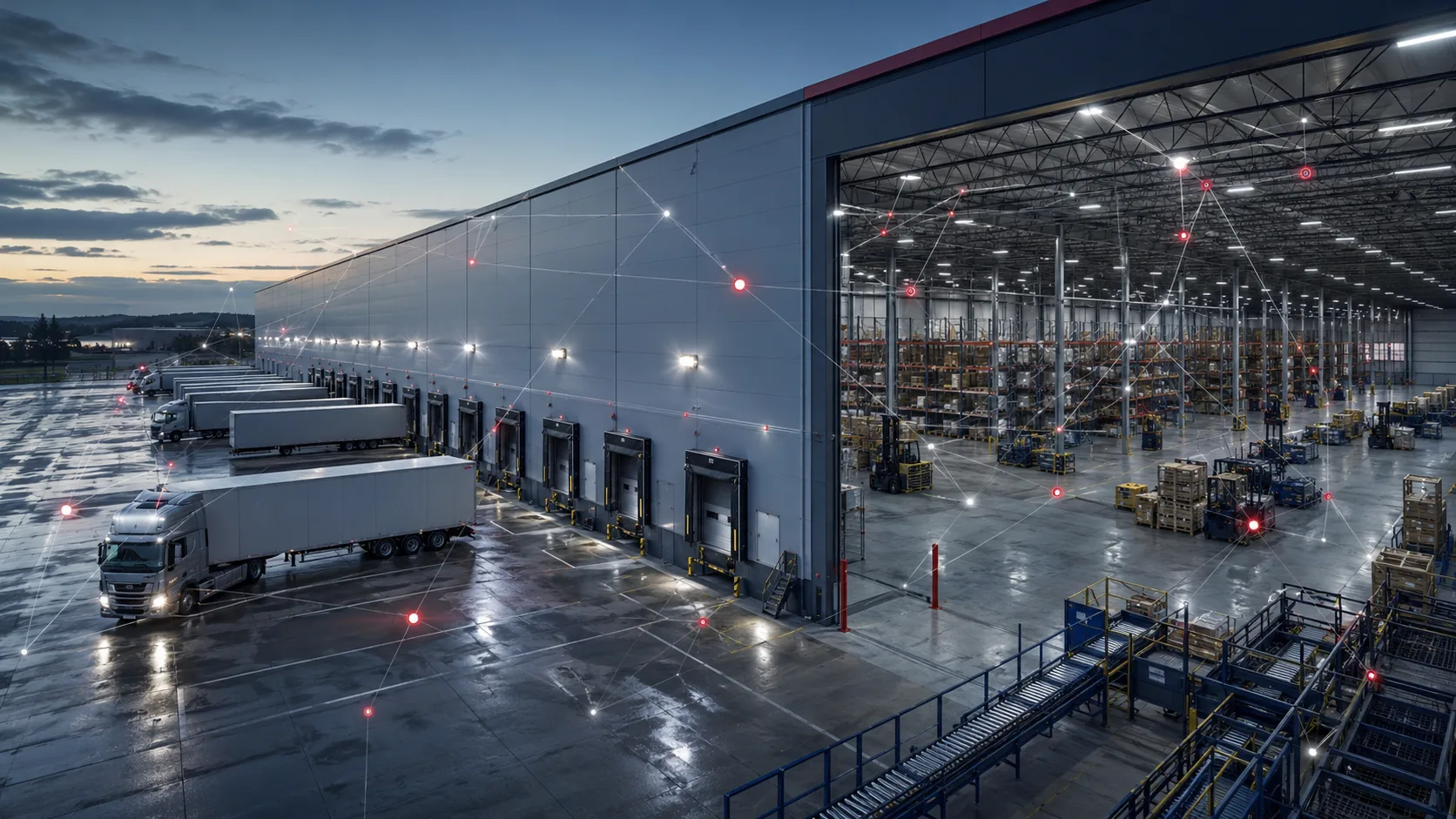
Private wireless — the backbone
A dedicated LTE/5G network on CBRS Band 48 with an onboard core, engineered for your building. Consistent coverage through racking and cold storage from far fewer radios than Wi-Fi — with full control over priority, security, and devices, and no ongoing spectrum cost.
ECHO SLAM — worker safety
UWB ranging with radar and BLE sensor pods detects the precise distance between forklifts and people in every direction and fires graduated audible and visual alerts before a collision can happen. It runs on the equipment itself — independent of the network for alerts — and feeds every event back for analytics.
Push-to-talk communications
Instant facility-wide voice for pickers, dock crews, and supervisors over your private network — replacing patchy two-way radios and dead-zone Wi-Fi calling. Group calling, dispatch, location, and recording on ruggedized handsets or any smartphone, indoors and out in the yard.
Real-time location & tracking
The same UWB and network fabric that powers safety also locates pallets, forklifts, and high-value assets across the full floor — not just near an access point. Geofencing, dwell time, and utilization analytics turn "go find it" into a glance at a map.
Cold-chain & environmental IIoT
Continuous temperature, humidity, and door/condition monitoring across ambient, refrigerated, and frozen zones — riding the private network with no extra cabling. Threshold alerts before excursions become losses, plus audit-ready logging for GDP, GMP, and 21 CFR Part 11.
A network built to be secure
The operational network is segmented from corporate IT by design — VLANs, QoS, 802.1X, and role-based access keep safety-critical traffic isolated and prioritized. It's the clean separation life-sciences and pharma freight need, on infrastructure you control.
One pane of glass. Your whole operation, live.
This is what we actually build — not a dashboard bolted onto someone else's hardware, and not a static 3D rendering, but a real, working digital twin of your facility. Every layer of the operation, integrated and connected, visible and analyzable in one place, in real time — down to a single item on a pallet.
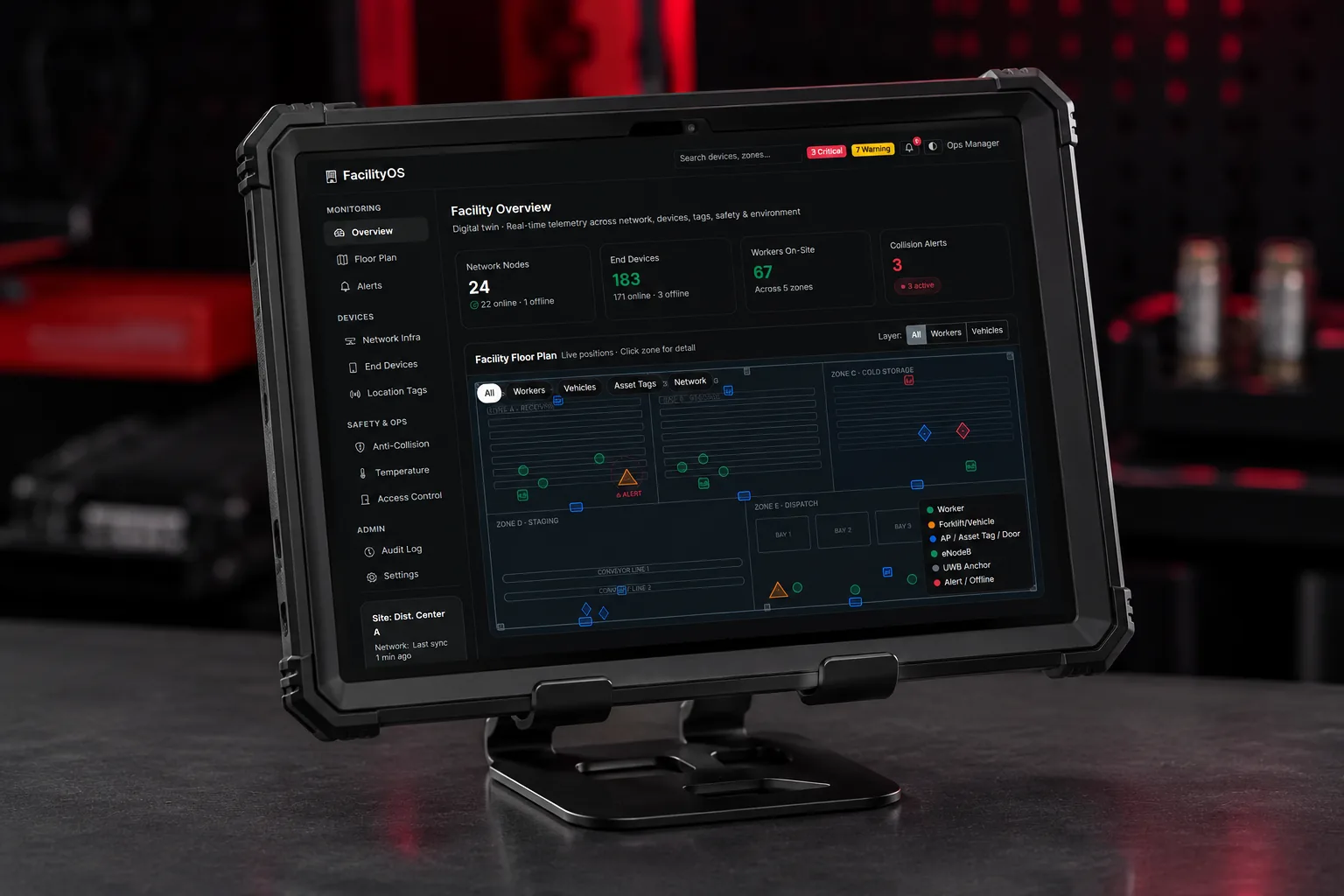
Where every worker is
Live positions of every worker-worn tag across the floor and yard — for safety, labor balancing, and knowing who's where when it matters.
Where every forklift is
Real-time location of every vehicle, with speed, dwell time, and utilization — see how traffic actually flows instead of guessing.
Which areas are being accessed
See who is entering restricted, hazardous, or controlled zones in real time — and get alerted the moment access rules are broken.
Temperatures across the facility
A live thermal picture of every ambient, refrigerated, and frozen zone — with threshold alerts before an excursion becomes a loss, and audit-ready logs behind it.
High-traffic zones
Heatmaps of where people and vehicles concentrate and cross — so you can redesign flow, target safety effort, and find bottlenecks with evidence.
Down to one item on a pallet
When the use case calls for it, resolution goes all the way to the individual item — knowing exactly where a single unit sits on a single pallet, not just which aisle it's in.
Interactive demo — move through a simulated facility on one pane of glass.
Every worker connected, equipped, and protected.
The digital twin shows the operation; the digital worker is the person at the center of it. The same solution that makes the building visible turns each frontline worker into a connected part of it — able to receive tasks, alerts, and comms, and to contribute their location and their work back to the twin.
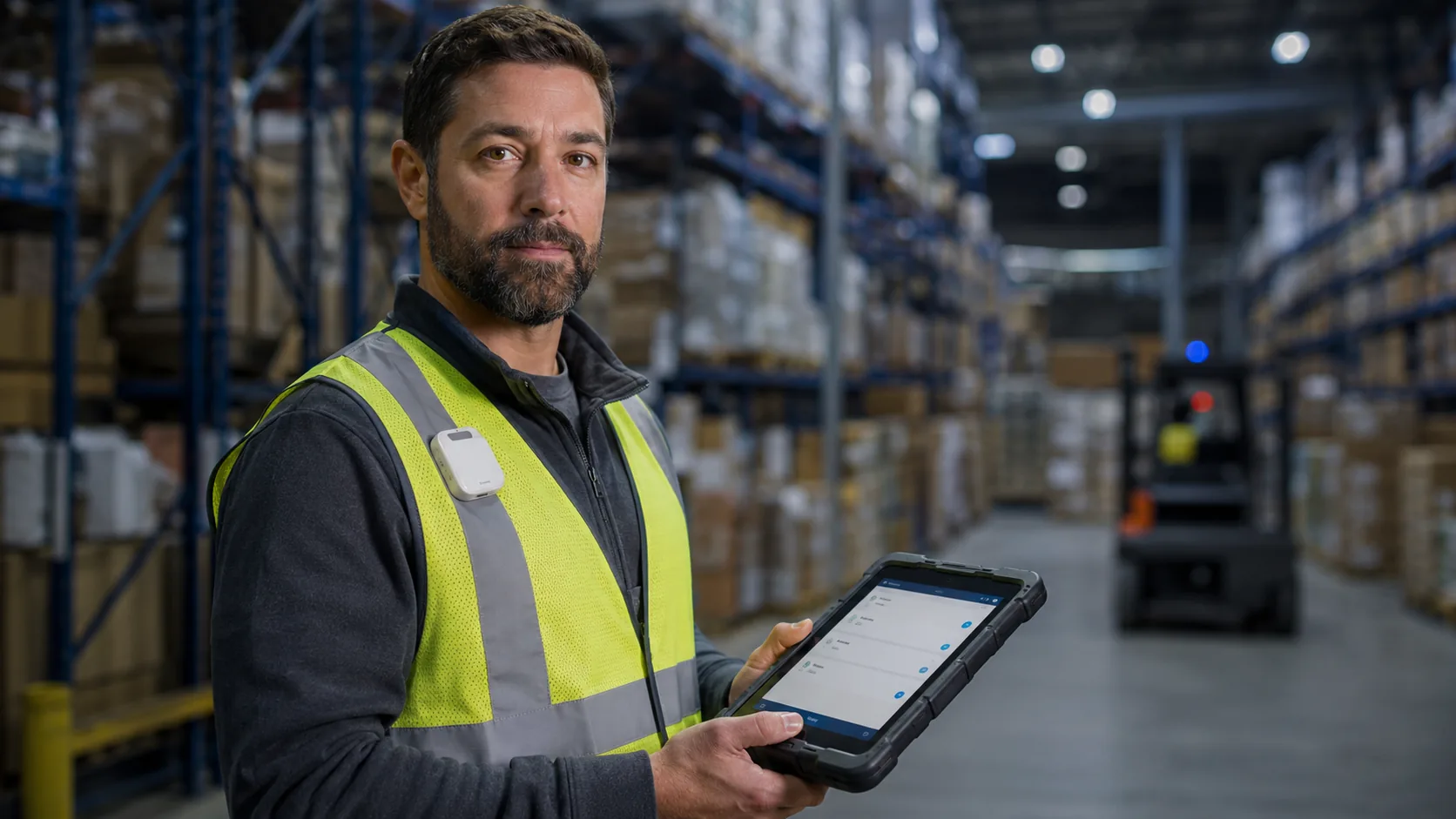
Equipped
Rugged handhelds and purpose-built apps for the actual job — picking, inspection, putaway — all managed and kept current, so the tools match the work instead of fighting it.
Protected
360° collision avoidance travels with them. The system warns before a forklift and a worker meet — at blind corners, busy docks, and on reverse travel.
Connected
Push-to-talk and facility-wide coverage mean any worker is reachable instantly — across the floor and out in the yard, with no dead zones to drop the call.
Visible
Their real-time location supports safety, coordination, and labor balancing — and feeds the live digital twin, so the picture of the operation always includes its people.
Transformation is built one layer at a time.
You don't transform an operation in a single leap — you lay a foundation you own and build on it. Each layer rides the one beneath it, which is why an integrated stack outperforms point solutions bolted together after the fact.
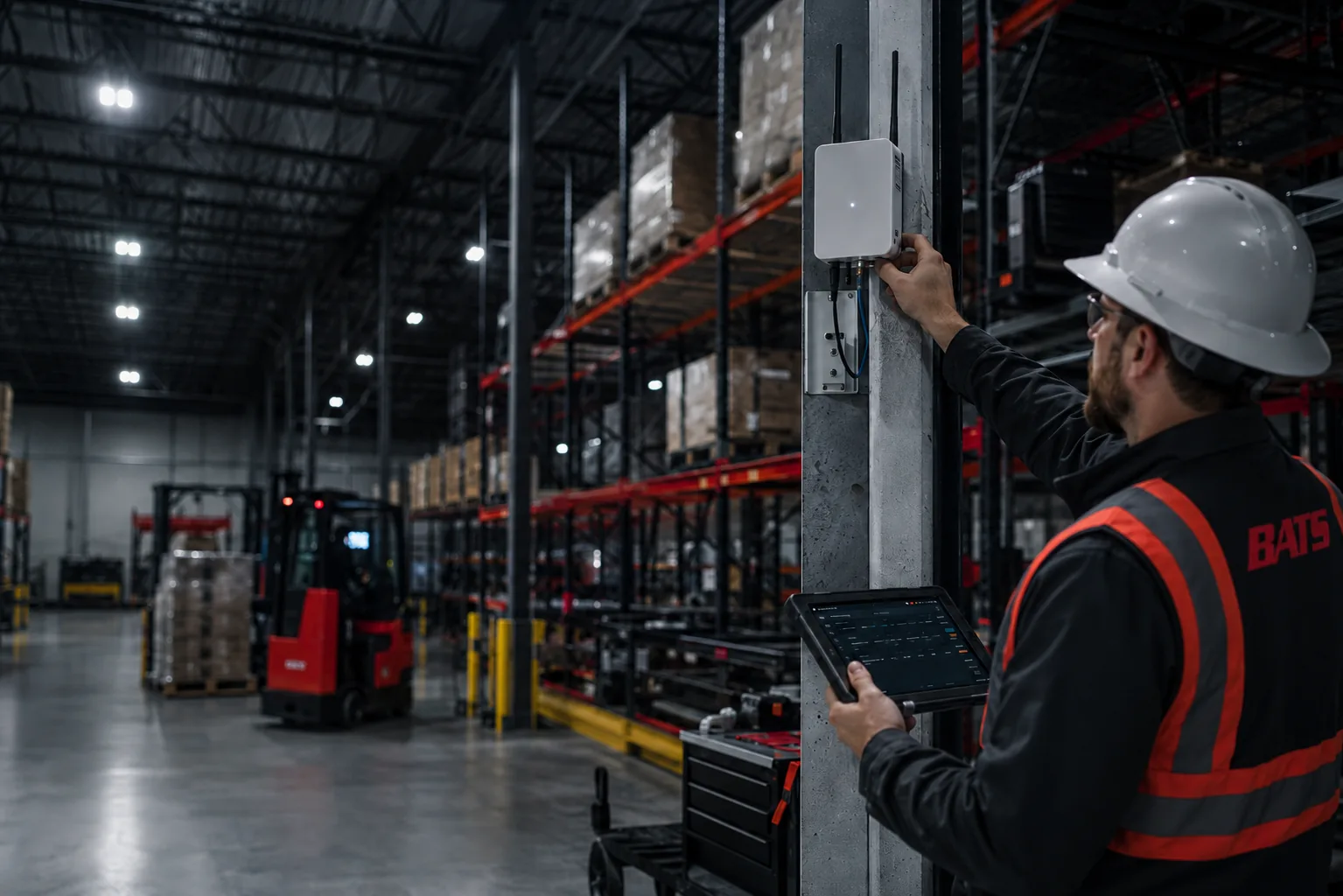
1 · Survey the building
We map the racking, cold rooms, dock, and yard and design coverage for your space — not a generic floorplan. The RF reality of a warehouse is the whole game.
2 · Deploy the private network
A CBRS LTE/5G network with an onboard core gives consistent coverage from far fewer radios — interference-protected, no ongoing spectrum cost. This is the foundation everything else rides on.
3 · Add the safety layer
ECHO SLAM sensor pods on forklifts and worker tags deliver 360° collision avoidance — alerting on their own, and feeding every proximity event back to the network for analytics.
4 · Add comms & tracking
Push-to-talk and real-time asset location ride the same backbone — facility-wide voice and a live map of every forklift and pallet, with no new infrastructure to stand up.
5 · Add IIoT sensing
Cold-chain and environmental sensors stream onto the network with no extra cabling — continuous condition logging and threshold alerts wherever product temperature and integrity matter.
6 · One dashboard, one truth
A unified view correlates safety, location, and conditions into one operational picture — so instead of six dashboards that can't talk to each other, you see and act on the whole operation.
We don't just connect your devices — we run their whole life.
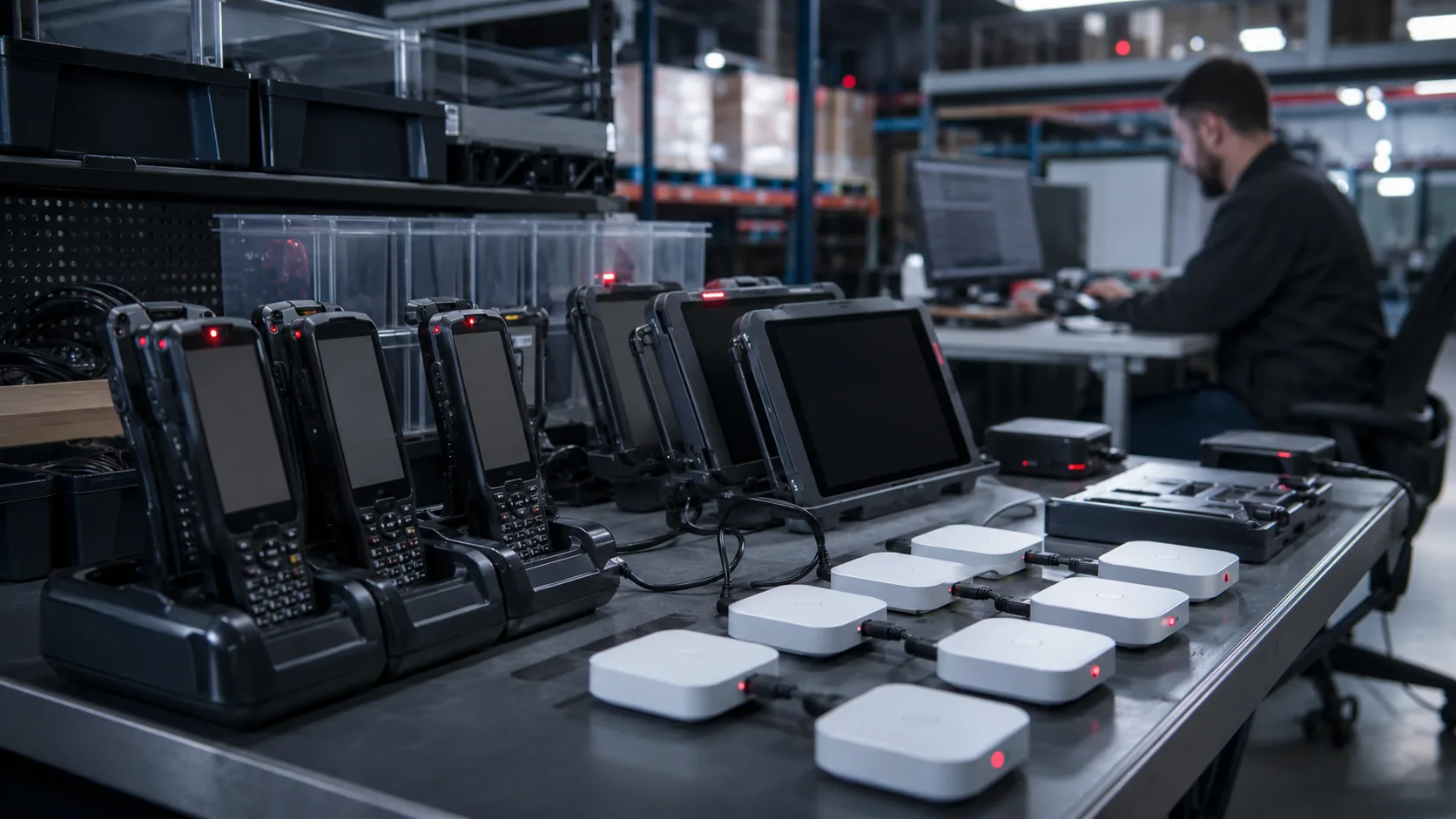
Most operators don't have the bandwidth to spec, build, secure, and support a fleet of devices and sensors. We do the entire cycle — for the mobile devices your people carry and for the IoT and custom hardware on the network. Mobile device management with Microsoft Intune integration where it fits your environment, so nothing on your network is unmanaged or unsupported.
1 · Use case first
We start from the job to be done — picking, inspection, yard checks, condition monitoring — and define what the device or sensor actually needs to accomplish before anyone talks hardware.
2 · Devices & custom hardware
Source the right rugged handhelds, tablets, and wearables — or, for IoT, design custom devices for use cases off-the-shelf gear can't cover. Either way, sized for your environment and your network.
3 · Custom applications
Purpose-built apps for the floor — picking, inspections, telemetry capture, driver workflows — instead of bending your operation to fit generic software. Built to run on the devices and the network we deploy.
4 · Configuration & enrollment
Security baselines, app loadouts, and policies applied through mobile device management — with Microsoft Intune integration where your environment calls for it — and zero-touch enrollment so devices come up configured, not blank.
5 · Deployment
Staged rollout and provisioning so devices and sensors arrive ready to work and land in the right hands — no IT scramble on day one, no half-configured units floating around the floor.
6 · Ongoing support & lifecycle
Monitoring, updates, troubleshooting, and replacement through end of life — for the managed devices and the IoT alike. One partner accountable for the whole cycle, not a chain of vendors pointing at each other.
The shifts reshaping logistics — and where ECHO fits.
Digital transformation in logistics is playing out on five fronts. We write about each in depth — and build the owned network and devices underneath them.
API-first WMS ecosystems
Why custom-coded WMS integration is dying — and API-first ecosystems onboard enterprise clients up to 4× faster.
Read the field noteReal-time EDI-to-API pipelines
Turn legacy EDI batches into live API events, so the floor reacts the moment something changes — not hours later.
Read the field noteSupply-chain digital twins
A live, simulatable model of the network: "if this port closes Tuesday, what breaks — and what do we reroute today?"
Read the field noteWMS + collaborative robotics
Cobots and AMRs beside human pickers — the real unlock is the orchestration between the WMS and the robot fleet.
Read the field noteData mesh vs. data lake
Treat warehouse data as a product owned by the floor that understands it — instead of bottlenecking it in central IT.
Read the field noteWMS as an operational platform
The WMS is becoming a growth platform — but it can only act on data that actually arrived. The foundation sits one layer below.
Read the field noteUnderstanding the integrated approach.
"Digital transformation" is a loaded term — what do you actually mean?
How is this different from other digital transformation efforts?
Is this really a "digital twin," or just a dashboard?
What do you mean by a "digital worker"?
Is ECHO only about forklift safety?
What exactly is ECHO SLAM?
Why run all of this on private wireless?
What is private wireless / CBRS, briefly?
How is the network kept secure and separate from corporate IT?
Can it support cold chain and compliance?
Do I have to replace my existing devices?
Do you manage the devices and apps too, or just the network?
Who is ECHO for Logistics?
Want to see how this works for your facility?
Tell us a little about your operation and we'll walk you through what a connected stack would look like on your floor and in your yard — coverage, forklift traffic, the systems you'd put on it. No pitch, no pressure: a working conversation about your environment and what's realistic.
We'll reply within one business day. Prefer email? hello@echoforlogistics.com
Request a briefing